Kheti Virasat Mission : Rebuilding The Legacy Of Organic Farming, Ecological Sustainability, And Community Empowerment


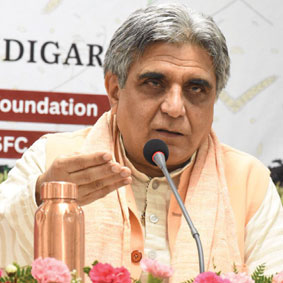
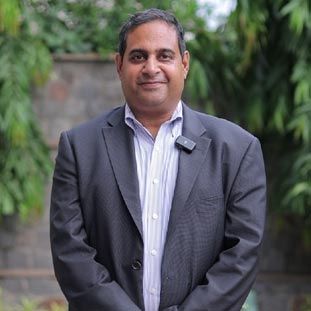
Umendra Dutt
Executive Director
Founding Vision Rooted in Compassion and Heritage
Kheti Virasat Mission (KVM) emerged as a response to the deepening ecological and social crisis in Punjab, once celebrated as the land that secured India’s food self- sufficiency through the Green Revolution. Established by Umender Dutt, a grassroots visionary who has spent over three decades working with rural communities, the mission was born out of concern for the region’s deteriorating soil health, contaminated water, vanishing biodiversity, and rising public health tragedies. Punjab and Haryana, which embraced high-yielding varieties, chemical fertilizers, and pesticides to sustain national food demand, now face a heavy price: depleted aquifers, toxic air, cancer belts, mental health challenges, and the erosion of traditional knowledge systems that once defined rural life.
From this landscape of urgency and empathy, KVM began its journey with an intent to restore ecological balance, revive indigenous seeds, promote organic and natural farming, and rebuild the cultural ethos that once saw agriculture not as a business alone but as a sacred relationship between soil, farmer, and community. Guided by the vision of “Jeher Mukti”- freeing the land and people from chemical dependency, the organization seeks holistic wellbeing, encompassing physical, psychological, emotional, and community health.
A Holistic Approach to Ecological Restoration
Factors that set Kheti Virasat Mission apart from mainstream agricultural NGOs are its deep-rooted focus on mindset transformation rather than mere agronomic techniques. The organization recognizes that chemical agriculture not only degrades natural resources but also fractures social systems. Villages that once supported each other and worked together for their livelihoods began to struggle when single-crop farming took over, replacing traditional village jobs and reducing natural biodiversity. Cotton, once a lifeline for rural artisans and women cotton-pickers, was displaced by paddy under state-led incentive structures, severing a cultural economy.
KVM, therefore, works on restoring a lost worldview, one where farmers saw themselves as custodians, not exploiters, of land. It emphasizes ecological literacy, encouraging farmers to understand the role of insects and microorganisms rather than viewing every pest as an enemy. By teaching about kwet insect porcella, the organization helps farmers realize that nearly 80 percent of insects are beneficial, preventing unnecessary pesticide use. Changing the psychology behind farming becomes the first foundational step to eliminating the need for costly chemicals.
To keep transitions feasible, KVM encourages farmers to start on poison free kitchen gardens, growing food for their families before scaling up. This phased model ensures no economic shock, while home-grown produce immediately reduces household expenses and builds confidence. Word-of-mouth creates demand for clean, chemical-free food, often yielding premium prices and new community-supported farming models. The organization promotes the concept of a ‘family farmer,’ much like a family doctor, encouraging direct relationships between producers and consumers. Through its KVM Kudrat Kisan Haat, farmers can sell their natural, chemical-free produce directly to urban consumers, strengthening trust and reconnecting both sides through a transparent, farmer first marketplace.
Livelihood generation lies woven into every stage, such as seed conservation, organic cotton production, millet processing, traditional crafts, and small-scale value-added enterprises. Organic cotton alone supports a chain of women farmers and artisans engaged in spinning, weaving, dyeing, and stitching, demonstrating how regenerative farming rebuilds rural employment. Millet revival initiatives empower women, enhance nutritional security, and diversify farm incomes, while community kitchens and food awareness workshops rebuild lost culinary traditions.
Education, Research, and the Future Ahead
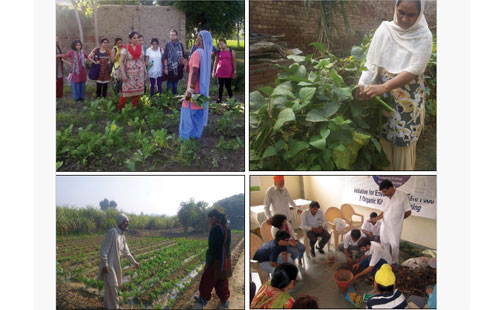
Education remains central to KVM’s vision. Through platforms such as Kudrat Kheti Gurukul, the organization offers intensive hands-on learning, training workshops, and immersive sessions led by experts from across India. Farmers learn by doing, sharing experiences, failures, and solutions as a community, building capacity that extends beyond textbooks. Residential trainings, village-level demonstrations, and online knowledge exchanges ensure continuous learning and accessibility.
Looking forward, Kheti Virasat Mission is strengthening village-cluster models where multiple farmers in the same locality adopt natural farming collectively, enabling shared processing units, peer mentorship, and sustainable marketing systems. The organization also intends to expand programs such as desi seed conservation, millet education, organic certification support, ecological crop-residue management, and its Trinjan initiative on organic cotton and artisan revival. While the primary focus remains on Punjab and Haryana, future expansion to other regions may evolve as resources and community readiness align.
In conclusion, Kheti Virasat Mission stands as a transformative movement rebuilding Punjab’s health, ecology, and cultural dignity through regenerative agriculture. By restoring indigenous wisdom, protecting biodiversity, and empowering farmers and families, it demonstrates that true sustainability grows from community, compassion, and resilience, shaping a future where agriculture heals rather than harms.
Through natural farming and community empowerment, Kheti Virasat Mission is rebuilding health, livelihoods, and hope across Punjab’s rural landscape
To keep transitions feasible, KVM encourages farmers to start on poison free kitchen gardens, growing food for their families before scaling up. This phased model ensures no economic shock, while home-grown produce immediately reduces household expenses and builds confidence. Word-of-mouth creates demand for clean, chemical-free food, often yielding premium prices and new community-supported farming models. The organization promotes the concept of a ‘family farmer,’ much like a family doctor, encouraging direct relationships between producers and consumers. Through its KVM Kudrat Kisan Haat, farmers can sell their natural, chemical-free produce directly to urban consumers, strengthening trust and reconnecting both sides through a transparent, farmer first marketplace.
Livelihood generation lies woven into every stage, such as seed conservation, organic cotton production, millet processing, traditional crafts, and small-scale value-added enterprises. Organic cotton alone supports a chain of women farmers and artisans engaged in spinning, weaving, dyeing, and stitching, demonstrating how regenerative farming rebuilds rural employment. Millet revival initiatives empower women, enhance nutritional security, and diversify farm incomes, while community kitchens and food awareness workshops rebuild lost culinary traditions.
Education, Research, and the Future Ahead
Education remains central to KVM’s vision. Through platforms such as Kudrat Kheti Gurukul, the organization offers intensive hands-on learning, training workshops, and immersive sessions led by experts from across India. Farmers learn by doing, sharing experiences, failures, and solutions as a community, building capacity that extends beyond textbooks. Residential trainings, village-level demonstrations, and online knowledge exchanges ensure continuous learning and accessibility.
Looking forward, Kheti Virasat Mission is strengthening village-cluster models where multiple farmers in the same locality adopt natural farming collectively, enabling shared processing units, peer mentorship, and sustainable marketing systems. The organization also intends to expand programs such as desi seed conservation, millet education, organic certification support, ecological crop-residue management, and its Trinjan initiative on organic cotton and artisan revival. While the primary focus remains on Punjab and Haryana, future expansion to other regions may evolve as resources and community readiness align.
In conclusion, Kheti Virasat Mission stands as a transformative movement rebuilding Punjab’s health, ecology, and cultural dignity through regenerative agriculture. By restoring indigenous wisdom, protecting biodiversity, and empowering farmers and families, it demonstrates that true sustainability grows from community, compassion, and resilience, shaping a future where agriculture heals rather than harms.