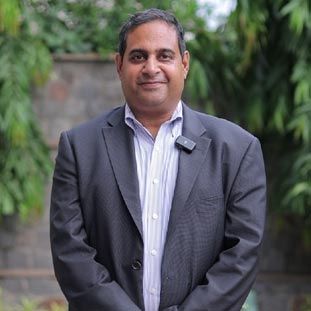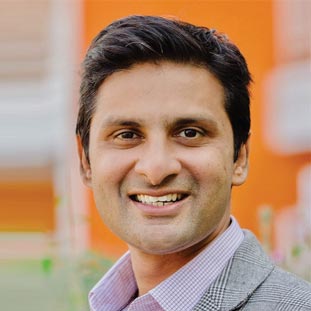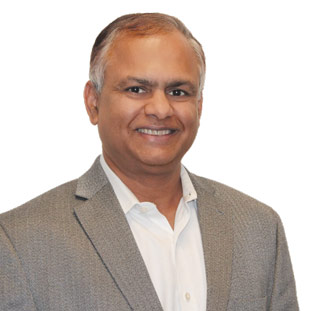

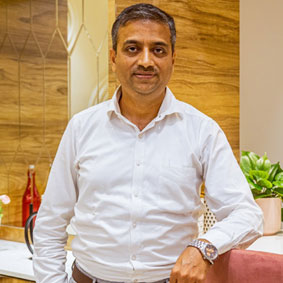
Ar Sachin J Indvatkar
Founder
Breaking away from this norm, Ar. Sachin J. Indvatkar, Principal Architect and Founder of 1 Studio Arch, set out to create designs that reflect his distinctive identity. After graduating in 2003 and gaining experience with several renowned architects, firms, and major organizations such as Reliance, he decided to build something of his own. In 2010, he founded Studio Arch with the vision of designing spaces that are based on independent ideas, creativity, and human psychology, and are not just limited by traditional design parameters.
Design Philosophy of 1 Studio Arch
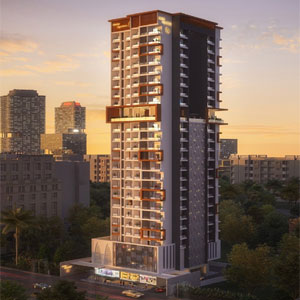
1 Studio Arch’s design philosophy revolves around the users. The team believes that architecture must extend beyond form and function to genuinely serve its users. Every structure is conceived with human behaviour at its core, designed to accommodate a diverse group of individuals. Every user’s experience is considered within the design.
The firm’s approach goes beyond the boundaries of a client’s brief. While a brief captures the client’s understanding, 1 Studio Arch digs deeper to uncover the true intent and purpose of the space. This process helps ensures that every design decision aligns with its realworld use.
Practice & Scope
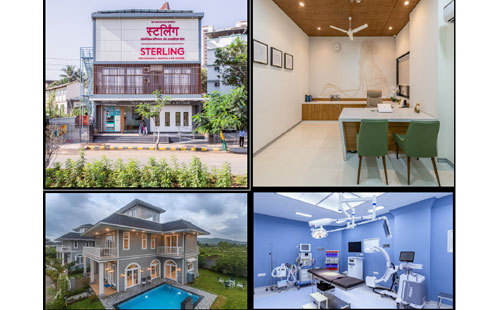
1 Studio Arch’s work stretches across a wide range of projects, from industrial spaces and hospitals to villas, luxury homes, and even a flying academy. The team has designed everything from residential and commercial buildings to schools, resorts, warehouses, and redevelopment projects, along with detailed interior design work. Recently, the studio also began working on a temple complex in the Netherlands, adding another international dimension to its journey.
What ties all this together is a clear design philosophy. Every project starts with understanding the typology, the users, and what that space truly needs to be. Whether it’s studying, researching, and defining what matters most before the first line is drawn. That groundwork helps them create designs that not only look good but also work beautifully for the people who use them.
Team & Approach
1 Studio Arch’s success is built on the foundations of a team skilled in managing projects from concept to completion. They not only present multiple design options but also provide detailed project reports that help clients make informed decisions at every stage. The architects, interior designers, planners, visualizers, and consultants, including MEP specialists, all work closely with clients as one cohesive team.
1 Studio Arch believes that collaboration brings far more strength and creativity than working in isolation. Every project is approached as a shared effort, where ideas are discussed openly and refined together. The team goes beyond strategic requirements, working to ensure the design is both well-presented and meaningful to the client.
When Challenges Become a Test of Capability
“Every project brings its own complexities at different stages, testing the team’s planning and adaptability”, says Ar. Sachin. He recalls one such instance, an industrial warehouse project in Djibouti, located on the African continent. The project itself was demanding, but the location added another layer of difficulty due to limited manpower, resources, and infrastructure.
The client had set a tight one-year deadline, which called for meticulous scheduling and coordination. Once the design was finalised, the team had to go back to the drawing board to plan the execution in detail, from sourcing materials from different parts of the world to managing time lines and manpower. “Working on-site under such constraints was a challenging experience, but it strengthened the team’s ability to adapt, plan, and deliver effectively even in the most demanding environments”, he adds.
Sustainability as a Mindset
For 1 Studio Arch, sustainability is not a design add-on but a mindset that begins at the core of every project. While the term “sustain ability” has become popular and is usually limited to the use of certain materials or technologies, the firm approaches it differently. The architecture firm believes true sustainability starts with passive design, how a structure is oriented, how it responds to its surroundings, and how the design itself supports long-term environmental harmony.
Every project, whether in Africa, Kashmir, or Bhopal, is conceived as a climate-responsive solution tailored to its specific location. The team emphasizes that materials and active systems come much later; the foundation of sustainability lies in the very concept and planning of the structure.
Balancing Functionality & Aesthetics
For 1 Studio Arch, functionality and aesthetics are inseparable, and both begin with a strong understanding of the user. Every design starts by studying how people will experience and interact with the space. This user centric approach ensures that function comes first, and aesthetics naturally follow.
Ar. Sachin explains that timeless architecture has always been rooted in simplicity and function. Many traditional Indian and colonial-era structures, though minimal in form, remain aesthetically appealing even after centuries. This, he believes, is because their beauty was born from purpose.
At 1 Studio Arch, the same principle guides every project. When the team focuses on how each space will serve its users and refines it to perfection, the design naturally takes on a pleasing aesthetic. There’s no need to force beauty into the process; it emerges organically.
1 Studio Arch’s success is built on the foundations of a team skilled in managing projects from concept to completion. They not only present multiple design options but also provide detailed project reports that help clients make informed decisions at every stage. The architects, interior designers, planners, visualizers, and consultants, including MEP specialists, all work closely with clients as one cohesive team.
1 Studio Arch believes that collaboration brings far more strength and creativity than working in isolation. Every project is approached as a shared effort, where ideas are discussed openly and refined together. The team goes beyond strategic requirements, working to ensure the design is both well-presented and meaningful to the client.
At 1 Studio Arch, every line drawn becomes a dialogue between the built and the unbuilt, between functionality and emotion, and between the client’s vision and the architect’s intent, as the team continues its journey with the same curiosity and passion that defined its beginning
When Challenges Become a Test of Capability
“Every project brings its own complexities at different stages, testing the team’s planning and adaptability”, says Ar. Sachin. He recalls one such instance, an industrial warehouse project in Djibouti, located on the African continent. The project itself was demanding, but the location added another layer of difficulty due to limited manpower, resources, and infrastructure.
The client had set a tight one-year deadline, which called for meticulous scheduling and coordination. Once the design was finalised, the team had to go back to the drawing board to plan the execution in detail, from sourcing materials from different parts of the world to managing time lines and manpower. “Working on-site under such constraints was a challenging experience, but it strengthened the team’s ability to adapt, plan, and deliver effectively even in the most demanding environments”, he adds.
Sustainability as a Mindset
For 1 Studio Arch, sustainability is not a design add-on but a mindset that begins at the core of every project. While the term “sustain ability” has become popular and is usually limited to the use of certain materials or technologies, the firm approaches it differently. The architecture firm believes true sustainability starts with passive design, how a structure is oriented, how it responds to its surroundings, and how the design itself supports long-term environmental harmony.
Every project, whether in Africa, Kashmir, or Bhopal, is conceived as a climate-responsive solution tailored to its specific location. The team emphasizes that materials and active systems come much later; the foundation of sustainability lies in the very concept and planning of the structure.
Balancing Functionality & Aesthetics
For 1 Studio Arch, functionality and aesthetics are inseparable, and both begin with a strong understanding of the user. Every design starts by studying how people will experience and interact with the space. This user centric approach ensures that function comes first, and aesthetics naturally follow.
Ar. Sachin explains that timeless architecture has always been rooted in simplicity and function. Many traditional Indian and colonial-era structures, though minimal in form, remain aesthetically appealing even after centuries. This, he believes, is because their beauty was born from purpose.
At 1 Studio Arch, the same principle guides every project. When the team focuses on how each space will serve its users and refines it to perfection, the design naturally takes on a pleasing aesthetic. There’s no need to force beauty into the process; it emerges organically.